Western Arthurs Traverse.
Words and pictures Scott Gelston.
Originally Published in Walkers Journal
Rising above the buttongrass plains south of Lake Pedder, the Western Arthurs stretch like a fortification across the landscape. The 20 kilometer long range is a magnet for seasoned bushwalkers, and the traverse is one of the most challenging tracked walks on offer in Tasmania.
Most hikers, including my mate Rob and I, start from Huon Campsite near Scott’s Peak Dam, head south to Junction Creek before climbing to the range via Alpha Moraine and descending a few days later via Kappa Moraine, affectionately known as the “A-K Traverse.”
After 12 months of planning we set out in late January with a nine-night window to soak up the scenery. But before we’d even departed, a pair of southwesterly lows looked to be shaking up our itinerary. The sentiment of other hikers we met on day one seemed to echo that we’d picked the wrong week to be up on The Arthurs
Making hay out of the buttongrass while the sun shined, we abandoned plans of camping at Junction Creek and pressed on to climb Alpha Moraine. After steadily gaining 800 meters of elevation from the plains below, we encountered a hiker, “The Guru”, heading home after six nights rough camping at Square Lake. Raving about his third trip to the region, The Guru was delighted to tell us we were mere metres from reaching another land, a land that “once you visit, you know you need to come back to.”
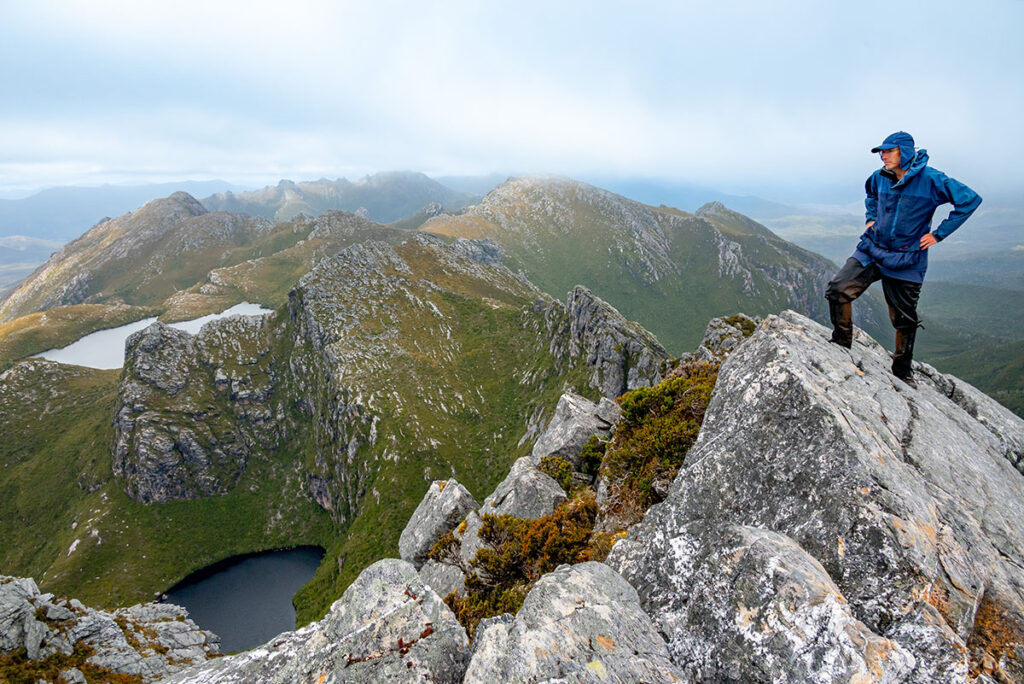
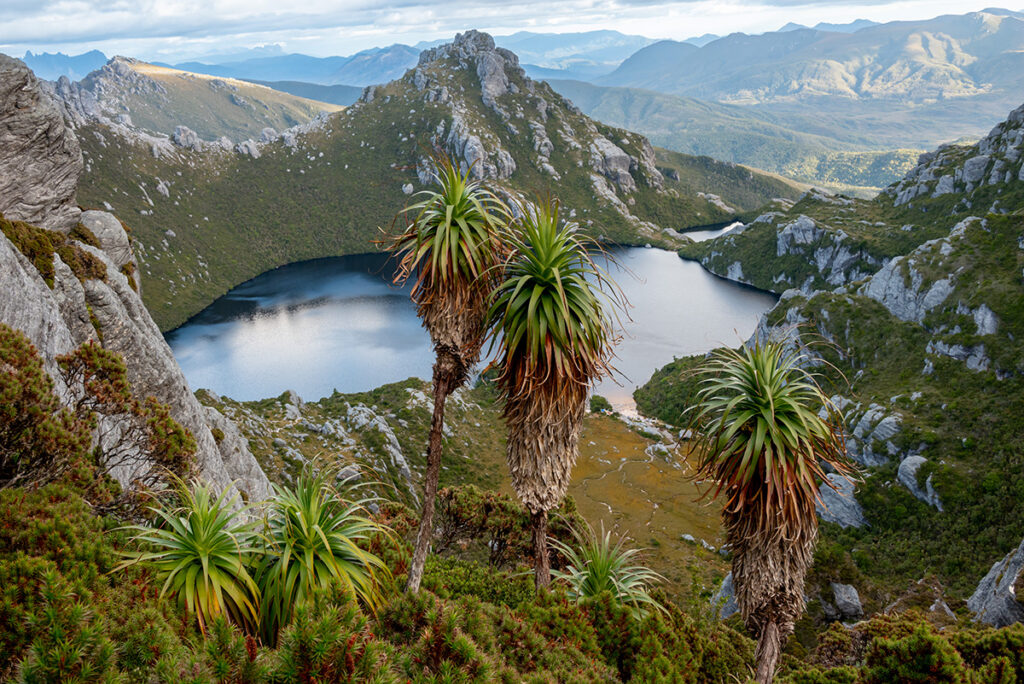
True to his word our world changed as we came out on top of the range: The Tasmania I’ve known and grown up in disappeared and was replaced by a land of folded quartzite, a land where stretches of alpine gardens run across the saddles, a land where glacial alpine lakes rest peacefully below jagged, rarely-visited ridges.
Despite wanting to take in every last detail, it was nearing sunset and we still had some kilometres to travel and a camp to set up, so the pace picked up as we crossed the open alpine terrain.
As I sat on a rock at dinner, taking in the beauty of the beach at Lake Cygnus and rejoicing that we were in fact on The Arthurs, the enormity of what lay ahead was setting in. We had six summits in our sights and around 3000 vertical metres ahead of us.
Back on the trail the following morning, the rhythm of the range began to become ingrained in our minds. Sharp climbs, narrow saddles, steep descents, followed by more of the same. The concept of keeping pace at a rate of kilometers-per-hour now replaced by eyeballing the trail ahead for the next rest stop.
Detouring to climb Mount Hayes, we began to pick out the peaks along the horizon, calling them out like a who’s who of South West celebrities: Orion and Sirius our nearby goals for the afternoon, Federation Peak in the Eastern Arthurs with its iconic spike, and on the horizon Precipitous Bluff in the Southern Ranges looking every bit as dangerous as its name suggests.
Much like a Hollywood blockbuster, the best was saved to last on day two as Lake Oberon came into view. Made famous by Peter Dombrovskis’ 1988 photograph, the scene remains almost identical to the 35-year-old image, save for some visible hardened walking trails to stop degradation of the wilderness.
Some parts of the Western Arthurs have gained notoriety, such as the Holy Rock, Tilted Chasm and the Beggary Bumps but in reality, anywhere can put you out of your comfort zone.
An alternate title to this article could have been “Descending Capricorn.” What appeared on the maps as another mountain to manage, our arrival coincided with cold showers, and seemingly a climb straight off a cliff into a trackless void. After 20 minutes of back and forth we realized, with the help of fellow hikers Aden and Aisha, that we’d missed the last cairn by 10 metres and we wouldn’t in fact be climbing off a sheer cliff, but instead be heading off the mountain via the steepest marked track I’ve ever seen.
We haven’t even reached the halfway point and I could go on about our two nights at Haven Lake as 70mm of rain fell, or the precarious climb along a rock slab to the summit of Mount Scorpio, but as musician Paul Kelly said “Let the part, tell the whole.” The Western Arthurs are truly a place not to be read about, but experienced.